

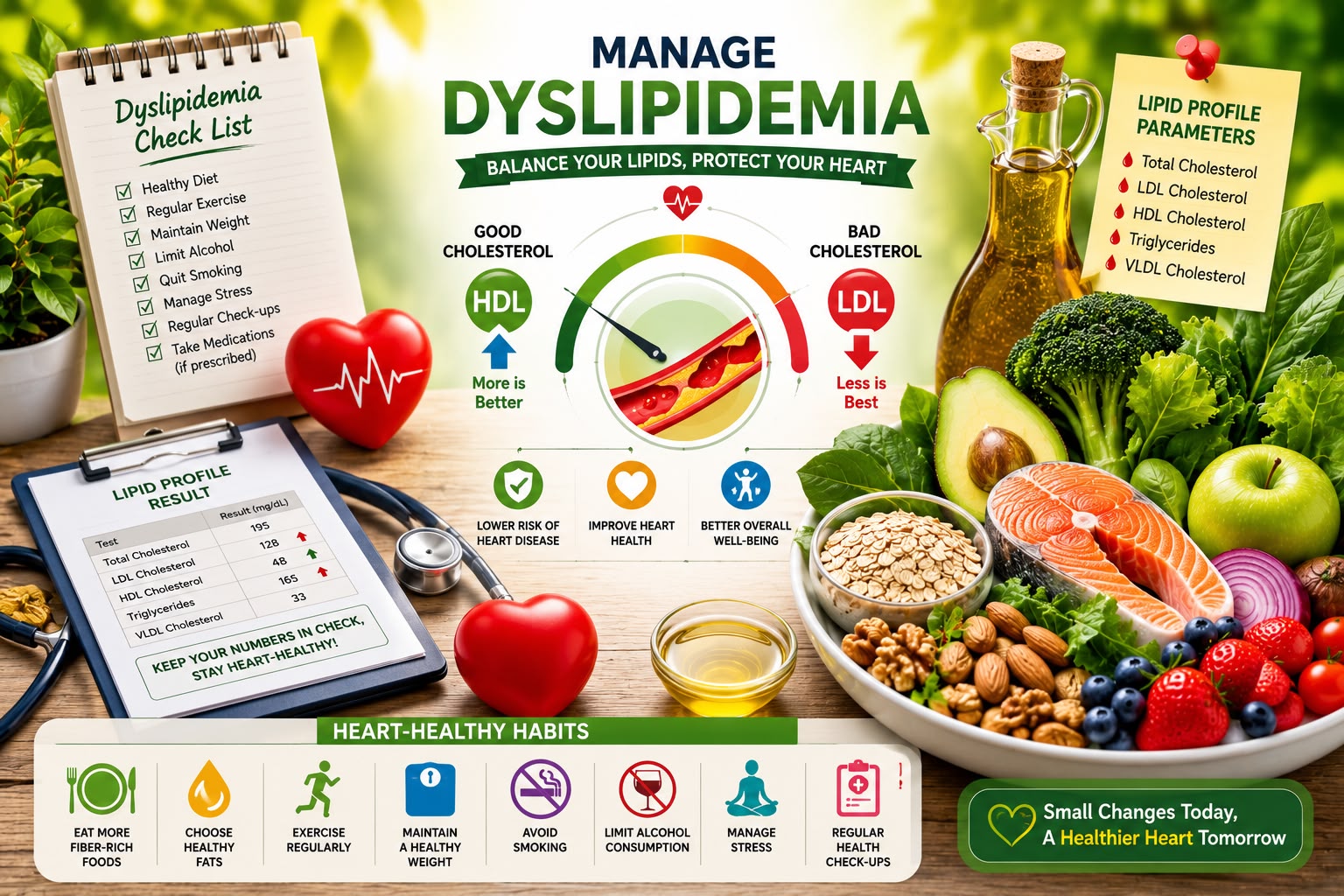
What Is Dyslipidemia?
Dyslipidemia refers to unhealthy levels of cholesterol or triglycerides in the blood. High LDL ("bad" cholesterol) and elevated triglycerides can increase the risk of heart disease, stroke, and other cardiovascular complications.
Making healthier food choices and avoiding certain foods can play an important role in maintaining healthy cholesterol levels.
Foods to Avoid
🍔 Fried Foods
Avoid foods such as:
- Fried chicken
- French fries
- Pakoras
- Chips
These foods are often high in unhealthy fats and calories.
🧈 Foods High in Saturated Fat
Reduce consumption of:
- Butter
- Excess ghee
- Cream
- Full-fat cheese
- Fatty cuts of meat
Excess saturated fat may contribute to increased LDL cholesterol levels.
🍰 Sugary Foods
Limit or avoid:
- Cakes
- Cookies
- Ice cream
- Chocolates
- Sweet desserts
High sugar intake can negatively affect cholesterol and triglyceride levels.
🥤 Sugary Beverages
Reduce consumption of:
- Cola drinks
- Soft drinks
- Sweetened fruit juices
- Milkshakes
These beverages can contribute to weight gain and metabolic health concerns.
🍖 Processed Meats
Examples include:
- Bacon
- Sausages
- Salami
- Hot dogs
Processed meats are often high in saturated fats and sodium.
🍕 Fast Foods
Avoid or limit:
- Pizza
- Burgers
- Fried snacks
- Instant foods
These foods frequently contain unhealthy fats, excess sodium, and refined carbohydrates.
Foods That May Help Improve Cholesterol Levels
Choose healthier options such as:
- Oats
- Barley
- Beans
- Lentils
- Fish (especially salmon and sardines)
- Almonds
- Walnuts
- Olive oil
- Fruits
- Vegetables
Lifestyle Changes for Better Cholesterol Management
- Exercise for at least 150 minutes per week.
- Maintain a healthy weight.
- Stop smoking.
- Limit alcohol consumption.
- Get adequate sleep.
- Follow a balanced diet rich in fiber and healthy fats.
Blood Tests to Monitor Cholesterol
BloodPanda provides:
- Lipid Profile
- Liver Function Test
- Blood Sugar Testing
- Thyroid Profile
- Comprehensive Preventive Health Checkups
Regular testing can help identify potential problems early and reduce the risk of cardiovascular disease.
Take a proactive approach to your heart health with regular cholesterol monitoring and preventive health screening.